Navigating Material Price Volatility in Commercial Bidding
Proven strategies for building escalation clauses, producer price index (PPI) tracking, and contingency buffers into lump-sum and GMP commercial bids.
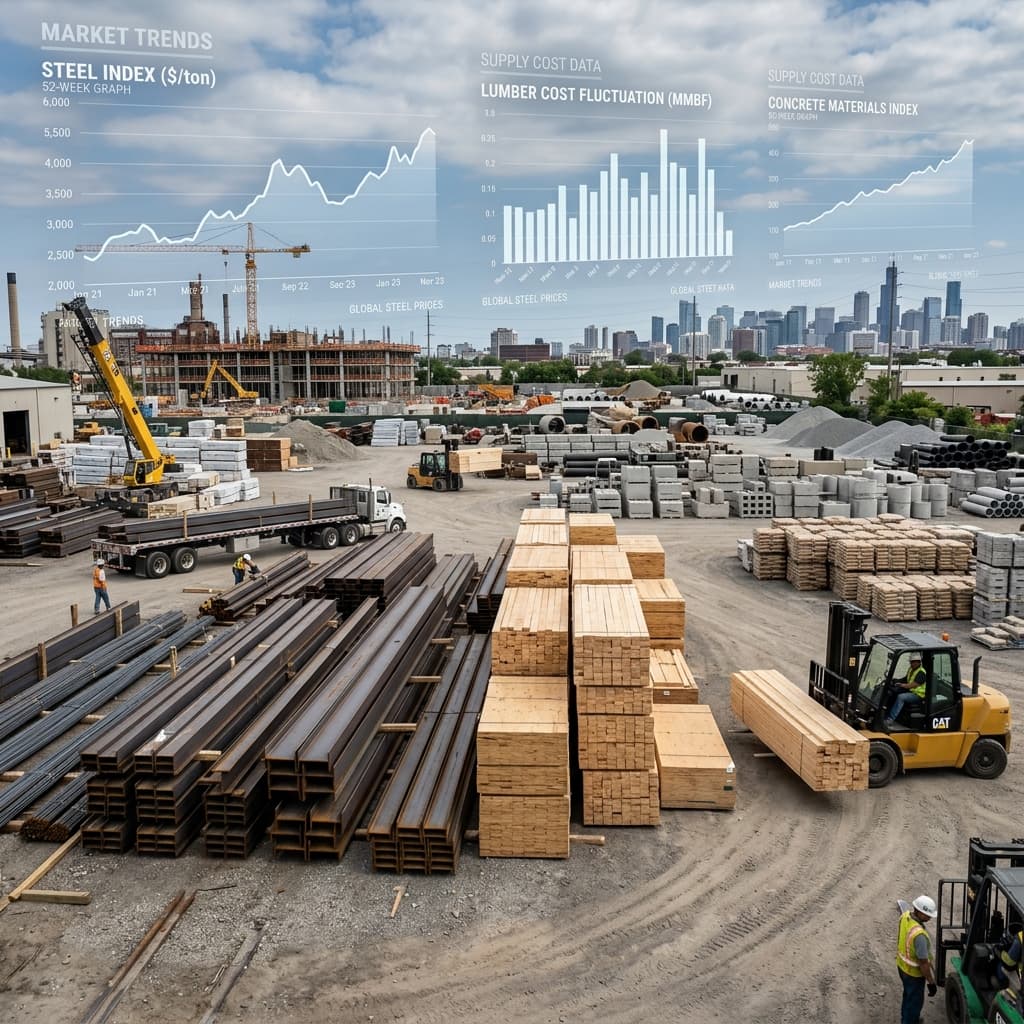
Key Takeaways for Estimators & Contractors
- ✔Commodity price swings across structural steel, ready-mix concrete, copper conduit, and lumber can wipe out contractor profit margins on fixed-price bids within 60 days.
- ✔Incorporating indexed price escalation clauses tied to Bureau of Labor Statistics (BLS) PPI benchmarks protects both contractor and project owner.
- ✔Supplier quote validity windows should dictate bid submission validity periods, preventing unhedged financial commitments.
Why Material Price Swings Threaten Fixed-Price Bids
Commercial construction tenders frequently require contractors to commit to lump-sum or Guaranteed Maximum Price (GMP) contracts months before ground is broken. When supply chain shocks, tariffs, or global demand surges impact core commodities—such as rebar, structural steel, PVC resin, and copper wire—contractors operating on standard 6% to 10% margins face catastrophic project balance sheet erosion.
- •Steel Mill Surcharges: Unannounced scrap surcharges impacting structural W-shapes, joists, and metal decking.
- •Ready-Mix Aggregates: Regional diesel fuel surcharges and cement shortages driving cubic yard premiums.
- •Copper & Aluminum Feeder Wire: Rapid commodity exchange swings impacting Division 26 electrical switchgear and distribution feeders.
Tracking Key Construction Producer Price Indices
Sophisticated general contractors do not guess future pricing; they calibrate estimates using real-time supplier quotes and indices published by the US Bureau of Labor Statistics (BLS) and RSMeans localized quarterly databases.
| CSI Division / Material | Volatility Level (2024-2026) | Primary Pricing Driver | Recommended Bid Protection |
|---|---|---|---|
| Div 03: Concrete & Rebar | Moderate to High | Scrap steel index & regional cement capacity | Firm supplier lock + 5% escalation cap |
| Div 05: Structural Steel | High | Global scrap pricing, energy surcharges | Pre-purchasing mill commitments |
| Div 06: Lumber & Framing | Extreme Seasonal Swings | Timber harvests, rail freight logistics | 14-day bid validity window |
| Div 26: Electrical Conduits & Wire | High | Copper commodity markets & import duties | Indexed material price adjustment clause |
Drafting Defensible Contract Escalation Clauses
A defensible price escalation clause establishes an equitable sharing of macroeconomic risk. Rather than inflating bid margins to an uncompetitive level, the contractor proposes a baseline price keyed to an objective index on bid day, specifying how documented material increases exceeding a threshold (e.g., 5%) will be reimbursed via change order.
Early Buyout and Staged Procurement Strategies
Upon notice of award, fast-tracking subcontractor buyout and locking in purchase orders with material distributors is the most effective operational defense. Utilizing bonded warehousing or negotiated laydown yards for early delivery of long-lead switchgear, HVAC chillers, and structural rebar neutralizes price swings and eliminates critical path construction delays.
Related Preconstruction Estimating Services
Frequently Asked Questions
What is a reasonable bid validity timeframe during volatile pricing cycles?↓
Contractors should limit formal bid proposals to 15 to 30 days during high volatility periods, ensuring that supplier material quotes do not expire before owner contract execution.
How does RSMeans account for localized construction cost variances?↓
RSMeans publishes quarterly City Cost Indexes (CCI) covering over 700 US metro locations, weighting local wage scales and material distributor pricing relative to a 30-city national average.